Polycarbonate Skylight vs. Solid Galvanized Steel Gazebo Roofs: Balancing Winter Daylight and Snow Strength
A gazebo can make an outdoor space more comfortable throughout the year, but choosing the right roof becomes especially important when winter brings shorter days, snowfall, and freezing temperatures. For homeowners exploring Kingston gazebos, one key decision is whether to choose a roof with polycarbonate skylight panels or a solid galvanized steel design. Both options offer practical benefits, but they differ in how they manage natural light, weather protection, and winter maintenance.
SUNJOY offers a range of outdoor structures designed to help homeowners make better use of their patios, decks, and backyards. Understanding the differences between these roofing materials can help you choose a Kingston gazebo that suits your climate, outdoor furniture, and everyday needs.
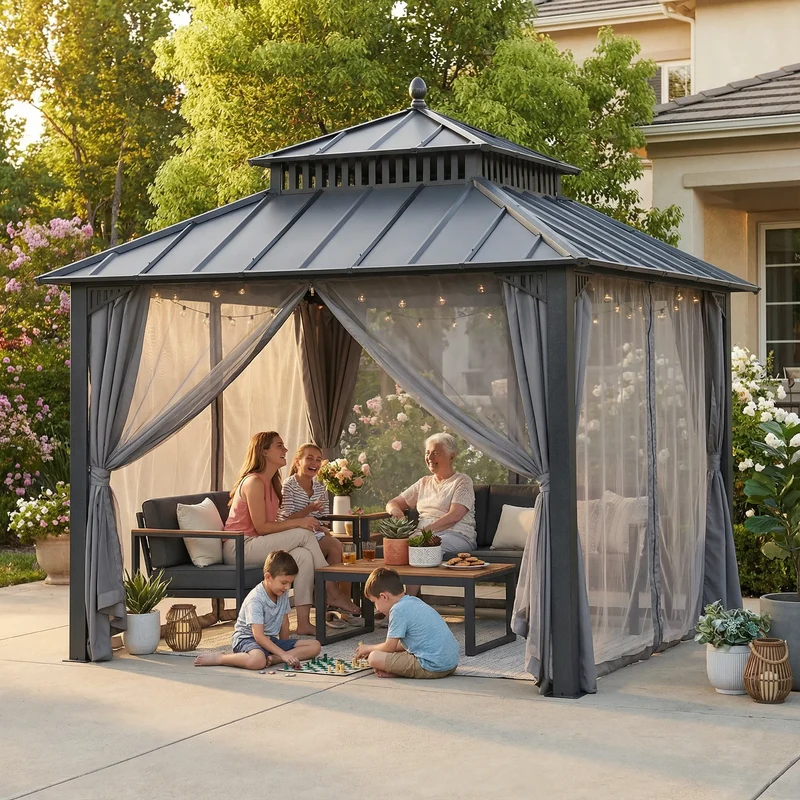
How Polycarbonate Skylights Change Winter Outdoor Living
During winter, natural daylight can make a covered patio feel more welcoming. Polycarbonate skylight panels allow sunlight to filter through the roof, helping brighten the space beneath the gazebo without leaving the entire seating area exposed to the weather.
This feature can be particularly useful for homeowners who enjoy outdoor dining, reading, or relaxing on clear winter afternoons. Compared with a fully opaque roof, a skylight design can create a more open atmosphere while maintaining overhead coverage.
However, the amount of light entering the gazebo depends on the size, placement, and transparency of the panels, as well as surrounding trees and buildings. Polycarbonate can also become dirty over time, so occasional cleaning helps maintain its light-transmitting properties.
For buyers comparing Kingston metal gazebos, it is worth checking whether the skylight panels are integrated into a metal roof and how the manufacturer specifies their weather resistance. Polycarbonate and metal may respond differently to temperature changes, so the quality of the panel connections and roof construction matters as much as the materials themselves.
Why Solid Galvanized Steel Roofs Appeal to Winter Buyers
A solid galvanized steel roof offers a different advantage: consistent overhead coverage without transparent sections. Galvanization provides a protective zinc coating that helps steel resist corrosion, making it a practical material for outdoor structures exposed to moisture and changing weather.
For homeowners who prefer shade during summer, less direct sunlight beneath the gazebo, and a more enclosed feeling, a solid steel roof may be the better fit. It can also provide a durable surface for year-round outdoor use when properly designed and maintained.
Snow performance, however, should never be judged by roof material alone. The roof pitch, supporting frame, connections, overall construction, and manufacturer-rated snow load all influence how well a gazebo handles winter conditions. A strong steel roof does not automatically mean the entire structure is suitable for heavy snowfall.
Before choosing a hard roof gazebo, review the product specifications and local weather requirements. In areas with frequent or heavy snow, prioritize a clearly stated snow-load rating and follow the manufacturer’s instructions for snow removal and seasonal care.
Which Gazebo Roof Is Better for Snow?
The best roof for a snowy climate is not necessarily the one that looks the strongest. It is the one engineered to handle the expected conditions at the installation site.
A sloped roof can encourage snow to slide off more readily than a flatter surface, although the actual performance depends on the roof design, snow type, and temperature. Wet, heavy snow can place considerable stress on a structure, while drifting snow may accumulate unevenly and create additional loads.
When comparing Kingston metal gazebos, look beyond whether the roof includes skylights or solid steel panels. Check the specified snow-load capacity, frame materials, anchoring requirements, and any restrictions on winter use. Do not assume that a particular roof shape or material guarantees safe snow shedding.
A two-tier roof may support ventilation and airflow, while gable and hip roofs offer different profiles and drainage characteristics. The right choice depends on the complete engineering design rather than appearance alone.
Balancing Daylight, Durability, and Maintenance
Your ideal gazebo roof should match how you plan to use the space. If winter daylight is a priority, polycarbonate skylights can help create a brighter outdoor retreat. If you prefer uniform shade and an opaque overhead surface, solid galvanized steel may be more suitable.
Maintenance is another consideration. Keep roof panels and drainage areas clear of leaves and debris, inspect fasteners periodically, and check for damage after severe weather. Follow the manufacturer’s guidance when cleaning polycarbonate, since abrasive materials or unsuitable chemicals can damage its surface.
For either design, secure anchoring and correct installation are essential. A gazebo should be installed on an appropriate foundation and maintained according to its specifications, especially in regions exposed to strong winds, freezing temperatures, and substantial snowfall.
Finding the Right Kingston Gazebo for Your Backyard
SUNJOY’s Kingston gazebo collection includes solid steel roof options and hybrid steel-and-polycarbonate roof designs in multiple sizes, making it easier to match your outdoor structure to your space and preferences. Whether you are furnishing a small patio or creating a larger outdoor dining area, consider how much daylight you want, how often your area receives heavy snow, and how you intend to use the gazebo throughout the year.