Nylon Tube Extrusion for Automotive Brake System: How Safety-Critical Production Is Configured and Validated
Brake tubing occupies a very different quality category from ordinary automotive fluid lines because dimensional variation, material defects, or an unnoticed process drift can affect the integrity of the braking circuit. PA12 is widely considered for polymer brake-line applications because of its balance of low-temperature flexibility, chemical resistance, and mechanical durability.
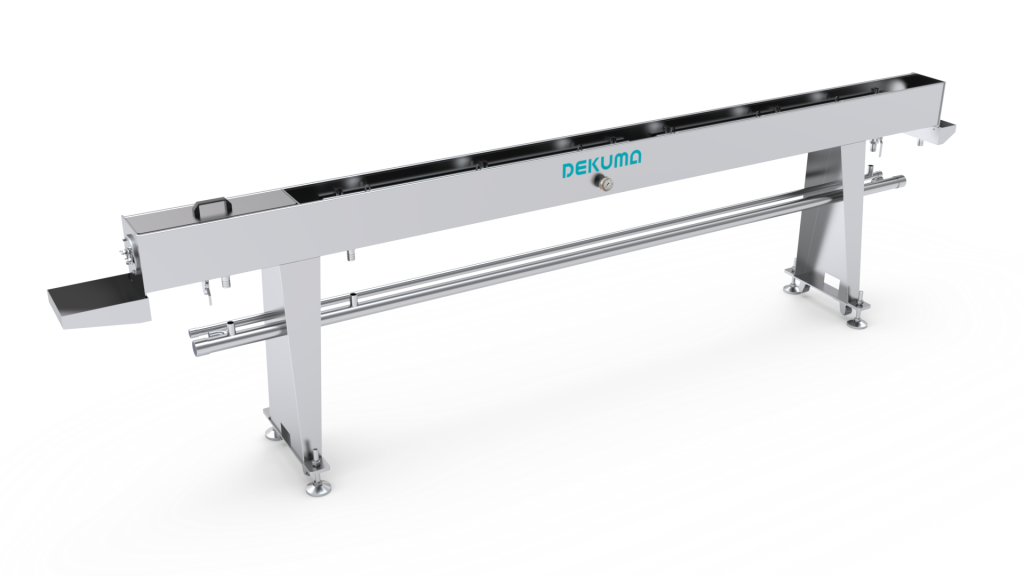
Nylon tube extrusion must consequently be treated as a controlled manufacturing process rather than simply a method of forming plastic tubing. DEKUMA’s automotive extrusion technology provides an example of how material control, dimensional monitoring, and production records can be integrated into a quality-focused tube manufacturing workflow.
Configuring PA12 for Brake Line Production
PA12 brake tubing requires a process window that reflects the polymer’s melt behaviour, moisture condition, and target dimensions. Resin preparation is particularly important because polyamide materials can absorb moisture, and excessive moisture during processing may affect melt stability and finished-tube properties. Drying conditions, material residence time, melt temperature, and extrusion speed should be established before production parameters are released.
The screw configuration also affects how consistently the polymer reaches the die. Excessive shear can increase thermal exposure, while insufficient melting may produce an unstable melt or dimensional variation. A controlled process aims to maintain steady pressure and material flow so that the tube wall remains uniform along its length.
For safety-critical tubing, machine settings should not exist only as operator knowledge. Production records can capture temperatures, pressure, line speed, screw speed, and other relevant parameters, creating a traceable process history. Nylon extrusion becomes much more controllable when deviations can be identified against an established operating window rather than discovered only through final-product inspection.
Building 100% Dimensional Inspection Into Production
Brake tubing has to fit accurately with connectors, clips, fittings, and other components in the braking system. Outer diameter, inner diameter, and wall thickness can all influence assembly and pressure behaviour. A production line that checks only occasional samples may miss short-duration dimensional excursions between sampling intervals.
Continuous measurement provides a different approach. Ultrasonic wall-thickness inspection can monitor the tube without interrupting production, while laser measurement can track external diameter at production speed. These systems can provide immediate process information and help identify gradual drift before large quantities of material are produced outside the specified range.
DEKUMA‘s automotive pipe extrusion solutions incorporate ultrasonic wall-thickness inspection and laser diameter measurement. They also include servo-controlled extrusion and downstream traction. Its multi-layer nylon tube extrusion line is intended for PA and PP/PE composite tubing, while the broader production concept emphasizes controlled material feeding and stable output. Such equipment characteristics can support safety-focused manufacturing, although the actual configuration and validation criteria must correspond to the specific brake-tube specification.
First Article and Production Surveillance
First article inspection establishes whether a newly configured process can produce tubing that meets the approved design requirements. The inspection can cover dimensions, appearance, material characteristics, mechanical performance, and other customer-specific criteria before routine production begins. A first article is not simply an administrative sample; it provides evidence that the released process configuration corresponds with the intended product.
Production surveillance serves a different purpose. Even after initial approval, raw-material variation, equipment wear, environmental changes, maintenance activities, and operator adjustments can gradually shift the process. Periodic dimensional checks, parameter reviews, material verification, and mechanical testing can reveal changes that a single first article cannot capture.
Traceability connects these two stages. Batch numbers, resin information, production dates, machine settings, inspection results, and nonconformance records can create a chain between finished tubing and the conditions under which it was produced. Nylon tube extrusion for brake applications benefits from this approach because investigation becomes more targeted when a dimensional or performance anomaly is detected.
Validating Compliance and Process Stability
FMVSS No. 106 establishes requirements for motor vehicle brake hoses, hydraulic brake hose assemblies, and related brake-hose components in the United States. A manufacturer developing PA12 brake tubing needs to identify which regulatory requirements apply to the specific product and assembly configuration. The standard should not be treated as a general material certification. Validation can involve dimensional, pressure, tensile, whip, burst, environmental, and other prescribed or application-specific tests depending on the product category.
Laboratory validation and manufacturing surveillance should also remain connected. A tube that passes qualification testing under controlled conditions still needs consistent production controls to reproduce the approved construction. Parameter recording helps compare routine output with the process conditions used during qualification, while automated dimensional inspection provides additional evidence of ongoing consistency.
DEKUMA’s nylon tube extrusion technology includes automated control, precise material feeding, and production monitoring concepts intended for automotive tubing. The company’s equipment portfolio also covers multilayer nylon structures using PA with PP/PE, reflecting the broader use of polymer tubing across conventional and new-energy vehicles. The relevant brake-line configuration, however, must be assessed against the exact material, dimensions, regulatory category, and customer validation program rather than inferred from general extrusion capability.
Conclusion
Safety-critical brake tubing requires more than a stable extrusion appearance; its manufacturing history, dimensional consistency, material condition, and validation evidence all contribute to product confidence. Nylon extrusion provides the forming process, while first article inspection, continuous dimensional measurement, parameter recording, and production surveillance create the quality framework around it.
PA12 can offer useful characteristics for automotive brake applications, but regulatory compliance depends on the finished product and applicable test requirements rather than the polymer name alone. DEKUMA’s automotive extrusion systems incorporate process control and inline measurement technologies that can support such a manufacturing strategy, with final compliance determined through application-specific validation against the relevant FMVSS and OEM requirements.