Top Reasons Why You Need Great Power Energy Systems
As electricity systems become more flexible and decentralized, energy storage is increasingly important for managing renewable generation, controlling peak demand, and improving power availability. For businesses and energy developers, choosing an appropriate energy container requires more than checking battery capacity. System architecture, application flexibility, safety, integration, and lifecycle performance all influence whether a storage solution can deliver practical value.
For organizations evaluating an energy storage container, several factors make a supplier’s technical breadth especially important. A comprehensive portfolio can help project owners select equipment according to the scale, operating environment, and energy-management objectives of each installation.
Solutions for Multiple Energy Storage Applications
One of the strongest reasons to consider Great Power is the breadth of applications covered by its energy storage business. The company’s solutions address utility-scale projects, commercial and industrial facilities, residential applications, portable energy storage, telecom base station backup, and smart solar-storage-charging scenarios.
This range matters for organizations operating different types of projects. A developer may need a large system for renewable integration, while a commercial facility may prioritize peak-demand management. Residential and telecom applications introduce different requirements for footprint, control, and backup performance.
A Portfolio Extending from Cells to Systems
An energy container is only one level of a complete battery energy storage architecture. The underlying battery cells, packs, racks, cabinets, thermal-management equipment, controls, and integration strategy can all affect system performance.
Great Power offers products across these levels, including energy storage cells, LiqPack and AirPack configurations, racks, cabinets, and containerized systems. This vertically integrated portfolio gives professional buyers more options when matching component-level technology with complete system requirements.
Utility-Scale Systems for Renewable Integration
Renewable generation can fluctuate according to weather and time of day. Energy storage can help shift electricity availability and support more flexible operation of solar and wind assets.
The large-scale portfolio includes the Max-20HC-6250, MAX-20HC-5000, and Max-20HC-3440. These systems are positioned for applications including wind or photovoltaic generation, regions with significant peak-valley price differences, and sites experiencing substantial load fluctuations.
For developers, this application range means an energy storage container can be considered as part of a broader energy-management strategy rather than simply as backup equipment.
High-Performance Residential Storage Cells
Residential systems require battery cells that can balance safety, durability, environmental adaptability, and integration requirements. This is particularly important as residential energy storage expands into markets with very different climates and operating conditions.
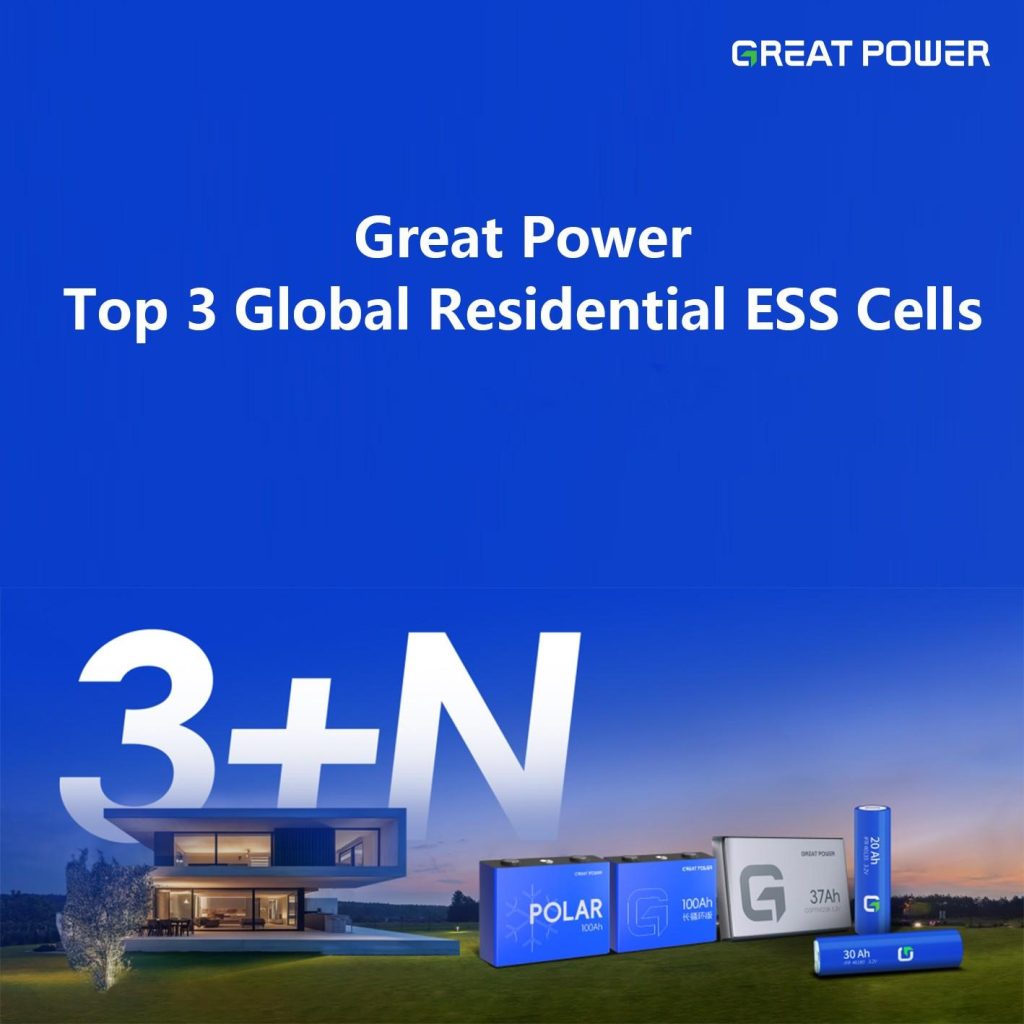
The residential portfolio includes the POLAR Series Low Temperature Residential Storage Battery, 100Ah Long-Cycle Battery, HOME Large Cylindrical Battery, and Pouch Cell. The POLAR model, for example, is designed for low-temperature operation and uses low-temperature technology for applications in colder environments.
The company is also ranked among the global Top 3 residential ESS cell suppliers. This position provides an additional reason for residential-system integrators to evaluate its cell portfolio.
Options for Different Thermal-Management Requirements
Thermal management becomes increasingly important as battery systems operate at higher energy densities and power levels. Different projects may require different cooling architectures depending on capacity, installation conditions, and performance objectives.
The LiqPack portfolio uses liquid cooling and is designed for container and cabinet energy storage systems. Its published specifications state a temperature difference within 2°C, while its metal casing incorporates thermal insulation. The AirPack portfolio uses air cooling and offers a more conventional configuration for container and cabinet systems.
Having both approaches available allows project teams to consider thermal-management requirements alongside the wider system design.
Safety Is Built into the Product Architecture
Safety should be evaluated at multiple levels in a battery energy storage project. Cell behavior, pack construction, thermal management, electrical protection, monitoring, and system-level testing can all influence risk management.
For example, the MAX-20HC-5000 is listed as compliant with UL9540A and NFPA855, with IP55 overall protection and IP67 protection for its Battery Pack. The Max-20HC-6250 incorporates a high-safety liquid-cooled PACK and a six-level safety protection system.
These published characteristics give professional buyers concrete technical points to examine when comparing storage solutions.
Designed for Commercial and Industrial Energy Management
C&I facilities often have electricity consumption patterns that differ considerably from utility-scale generation sites. Demand charges, peak-valley electricity pricing, load fluctuations, and onsite renewable generation can all affect the value of storage.
A properly selected energy storage container can support these applications by providing a controllable source of stored electrical energy. The large-scale systems are specifically positioned for regions with significant peak-valley price differences and facilities with substantial daily load fluctuations.
This makes application-specific system selection important. The ideal configuration depends on the site’s load profile, tariff structure, operating schedule, and integration requirements.
Global Experience Supports Project Evaluation
For B2B customers, supplier experience matters because an energy storage project involves more than equipment delivery. Technical documentation, quality management, integration support, commissioning, and long-term service can all influence project execution.
The company states that its energy storage products operate across more than 50 countries and regions, with more than 300,000 sets installed and zero accidents in installed projects according to its published corporate information. It also lists BloombergNEF Tier 1 recognition for 2024 and 2025.
Conclusion
Great Power combines cell-level products with solutions for utility-scale, C&I, residential, portable, telecom, and solar-storage-charging applications. This breadth, together with its position among the global Top 3 residential ESS cell suppliers and recognition among leading new-energy enterprises, makes its energy systems worthy of consideration by professional buyers seeking a supplier capable of addressing multiple storage scenarios.
Ultimately, selecting an energy storage container should be based on measurable project requirements rather than brand recognition alone. By comparing system architecture, application suitability, safety, thermal management, integration, and long-term operating objectives, developers and businesses can determine whether a particular storage solution provides the right technical and commercial fit.